
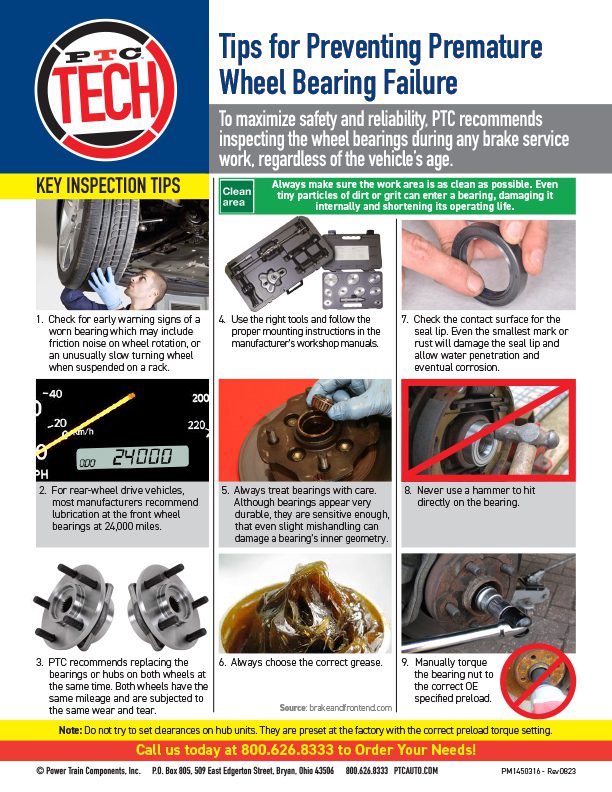
Tips for Preventing Premature Wheel Bearing Failure
9 Expert Tips to Prevent Premature Wheel Bearing Failure
Wheel bearings may seem tough, but they’re sensitive to contamination, mishandling, and incorrect installation. To maximize safety and reliability, PTC recommends inspecting the wheel bearings during every brake service—regardless of vehicle age. Here are 9 proven tips to prevent premature failure:
1. Watch for Early Warning Signs
Noise during rotation or resistance when spinning a suspended wheel can indicate early failure.
2. Inspect and Lubricate at Regular Intervals
For rear-wheel drive vehicles, front wheel bearings often require lubrication around 24,000 miles. Follow the manufacturer’s service intervals.
3. Replace in Pairs
PTC recommends replacing both sides—bearings or hubs—as they typically experience identical wear.
4. Keep It Clean
Work in a clean environment. Even small particles can enter a bearing and reduce service life.
5. Use the Right Tools
Always follow the correct installation procedure from the manufacturer. Skipping this step risks internal damage.
6. Handle with Care
Bearings are precise components. Dropping or mishandling them can distort the inner geometry.
7. Inspect Seal Contact Surfaces
Even minor rust or scoring on the seal lip area can cause water intrusion and future corrosion.
8. Never Strike the Bearing Directly
Using a hammer on the bearing can damage internal components. Always press bearings properly.
9. Torque to OE Specifications
Manually torque the bearing nut to the correct preload—never guess. Note: Hub units are factory pre-set and should not be adjusted.
Follow these tips to reduce comebacks, extend service life, and improve customer satisfaction.